

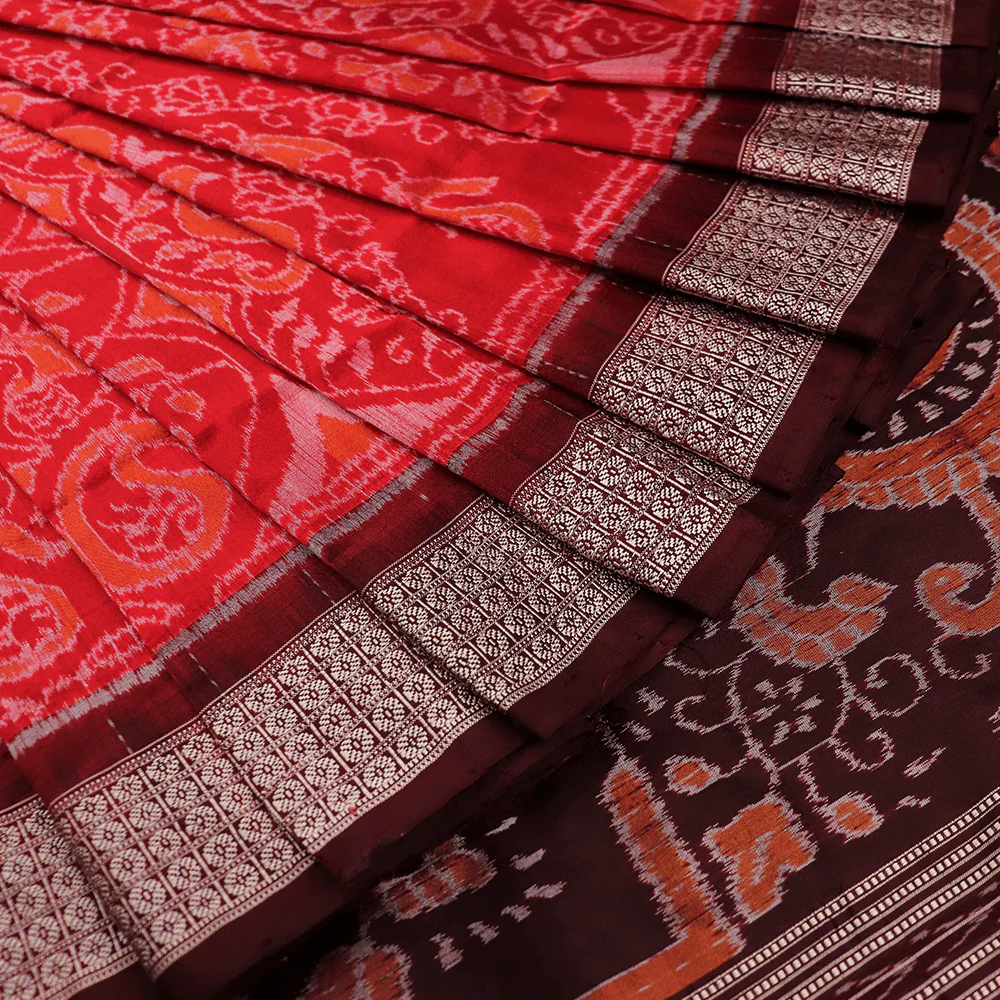
The Sambalpuri saree is a symbol of timeless elegance, cultural pride, and intricate craftsmanship. Originating from the western part of Odisha, particularly the districts of Sambalpur, Bargarh, Sonepur, and Balangir, this traditional handwoven saree represents the spirit and identity of Odia heritage. It is more than just attire; it is a living art form that tells stories through its threads.
What makes the Sambalpuri saree truly special is the Ikat or Bandha technique used in its creation. Unlike printed or embroidered fabrics, the design in a Sambalpuri saree is not added after weaving—it is dyed into the threads before they are woven. Both warp and weft threads are tie-dyed in specific patterns and colors, and only then are they woven into a fabric. This meticulous process demands immense skill, patience, and precision, making each saree a masterpiece that can take weeks to complete.
Sambalpuri sarees are celebrated for their symbolic motifs inspired by nature, mythology, and traditional beliefs. Designs like the chakra (wheel), shankha (conch), phula (flower), and pasa (dice) often hold spiritual or cultural significance. The color combinations are bold and earthy, with reds, blacks, whites, and deep blues being commonly used. These elements come together to reflect the rural aesthetics and philosophical depth of Odisha’s culture.
One of the most admired varieties of Sambalpuri sarees is the Pasapalli saree, known for its checkerboard pattern, which resembles a traditional board game. Similarly, the Bomkai and Bapta sarees, also part of the Sambalpuri family, are revered for their uniqueness and regional identity.
Sambalpuri sarees gained national recognition during the 1980s when the late Prime Minister Indira Gandhi began wearing them frequently in public appearances. Since then, these sarees have found admirers across India and abroad, appreciated for their authenticity, elegance, and handloom charm.
The weaving of Sambalpuri sarees is not just a profession but a tradition passed down through generations. Entire communities in Western Odisha are involved in the weaving process, and many weavers are now part of cooperatives and self-help groups that ensure fair wages and promote the craft sustainably. Government initiatives and GI (Geographical Indication) tagging have also played a role in protecting the authenticity of these sarees.
Today, in an era dominated by machine-made fashion, Sambalpuri sarees stand as a proud reminder of India’s rich textile heritage. They are not just garments but woven stories—carrying with them the legacy of Odisha, the hands of the artisan, and the warmth of tradition.